Have you ever wondered whether peach or speech is the correct spelling? These two English words look similar because they share the same ending, but they have completely different meanings and uses. Choosing the wrong one can change the meaning of your sentence entirely.
The correct spelling depends on what you want to say. Peach refers to a fruit, a pale orange-pink color, or something described as peach-colored. Speech refers to spoken communication, a formal talk, or a person’s ability to speak.
In this guide, you’ll learn the difference between peach and speech, understand their pronunciation, explore practical examples, and discover simple ways to remember which word to use.
Peach or Speech: Which Spelling Is Correct?
Both peach and speech are correct English words. Neither is a misspelling of the other. However, they are not interchangeable because they have different meanings.
What Does Peach Mean?
The word peach is primarily a noun that refers to a soft, juicy fruit with fuzzy skin and a large stone in the center. Peaches are commonly orange or yellow inside, sometimes with reddish skin.
For example:
- I bought a fresh peach from the market.
- She sliced a peach into her breakfast bowl.
- The peach tree produces delicious fruit in summer.
The word peach can also describe a pale pinkish-orange color.
For example:
- She wore a beautiful peach dress.
- The bedroom walls are painted peach.
- I chose peach-colored flowers for the wedding.
In informal English, peach can also describe someone or something particularly pleasant or excellent.
For example: “Your new garden is a peach!”
What Does Speech Mean?
The word speech is a noun that refers to the expression of thoughts, ideas, and feelings through spoken words. It can also mean a formal talk delivered to an audience.
For example:
- The teacher gave a speech about honesty.
- His speech impressed everyone in the room.
- Public speaking requires practice and confidence.
Speech can also refer to a person’s ability to speak or the way someone communicates verbally.
For example:
- The child is developing speech skills.
- The doctor evaluated the patient’s speech.
- Clear speech makes communication easier.
Quick answer: Use peach when referring to the fruit or color. Use speech when referring to speaking, spoken communication, or a formal address.
What Is the Difference Between Peach and Speech?
Although these words share the letters each, their meanings, pronunciation, and grammatical uses differ.
Peach vs. Speech: Comparison Table
| Feature | Peach | Speech |
|---|---|---|
| Part of speech | Primarily a noun; also used as an adjective | Primarily a noun |
| Main meaning | A fruit or a pale orange-pink color | Spoken communication or a formal talk |
| First sound | /p/ | /s/ |
| Pronunciation | /piːtʃ/ | /spiːtʃ/ |
| Example | I ate a ripe peach. | She delivered a speech. |
| Common phrases | Peach tree, peach juice, peach color | Speech therapy, freedom of speech, public speech |
How Does Peach Differ From Speech in Meaning?
The easiest way to distinguish these words is to consider the subject of your sentence.
If you’re discussing food, fruit, gardening, fashion, or colors, peach may be the right choice.
Examples:
- We picked peaches from the orchard.
- Peach is my favorite summer color.
- The smoothie contains banana and peach.
If you’re discussing communication, presentations, debates, or language development, speech is generally the correct choice.
Examples:
- He prepared a speech for the ceremony.
- The students practiced their speeches.
- Speech therapy helped improve her communication skills.
Can Peach and Speech Be Used Interchangeably?
No. These words cannot normally replace each other because they describe different things.
Consider these sentences:
- Incorrect for the intended meaning: “The principal delivered a peach.”
- Correct: “The principal delivered a speech.”
The first sentence suggests that the principal delivered a fruit rather than giving an address. Although unusual contexts can make almost any sentence possible, speech is the natural word when discussing a formal talk.
Similarly:
- Incorrect for the intended meaning: “I ate a speech.”
- Correct: “I ate a peach.”
The difference is not a grammatical rule about similar spellings. It is a difference in vocabulary and meaning.
How to Pronounce Peach and Speech Correctly
Pronunciation is another useful way to understand the difference between peach and speech. Both words contain the long ee sound and end with the ch sound, but their initial sounds are different.
How to Pronounce Peach
The word peach is pronounced /piːtʃ/ in both standard British and American English.
Break it into three sounds:
- P: A short sound made by bringing your lips together and releasing air.
- EE: A long vowel sound, as in see or green.
- CH: The sound heard at the end of chair or cheese.
Put these sounds together: PEE-ch.
Example: “The peach tastes sweet.”
The word has one syllable, so you pronounce it as a single unit rather than separating it into multiple parts.
How to Pronounce Speech
The word speech is pronounced /spiːtʃ/ in standard British and American English.
Break it into three main sound groups:
- SP: Begin with the /s/ sound, then move directly into /p/.
- EE: Hold the long vowel sound, as in see.
- CH: Finish with the sound at the end of cheese.
Put these sounds together: SPEE-ch.
Example: “Her speech was inspiring.”
The main pronunciation difference is the additional /s/ sound at the beginning of speech.
A Simple Pronunciation Trick
Practice these pairs aloud:
- Peach — speech
- Peach tree — speech therapy
- Eat a peach — give a speech
- Peach color — freedom of speech
Start slowly and focus on the first sound. Once you can hear the difference between /p/ and /sp/, distinguishing these words becomes easier.
The Cambridge Dictionary provides audio pronunciations and definitions for peach that can help you practice.
Common Examples of Peach and Speech in Everyday English
Understanding a word’s definition is helpful, but seeing it in everyday situations makes it easier to remember.
Examples of Peach in Sentences
Here are several natural examples of peach:
- I packed a fresh peach for my afternoon snack.
- The farmer planted three peach trees.
- She decorated the room with peach curtains.
- Would you like peach juice with your breakfast?
- The baby wore a peach-colored sweater.
- We bought ripe peaches at the farmers’ market.
- The sunset created a beautiful peach glow across the sky.
In these sentences, peach refers to fruit, a color, or a visual description.
Examples of Speech in Sentences
Now consider these examples of speech:
- The student delivered a speech about climate change.
- Her graduation speech brought tears to our eyes.
- Freedom of speech is an important civil liberty.
- The child is receiving help with speech development.
- He practiced his speech in front of a mirror.
- The audience applauded after the politician’s speech.
- Clear speech helps people communicate effectively.
In each example, speech relates to communication, speaking, or a formal address.
Common Mistakes to Avoid
Writers sometimes confuse similar-looking words when typing quickly, particularly when they are unfamiliar with the context.
| Incorrect usage | Correct usage | Reason |
|---|---|---|
| She gave a peach at graduation. | She gave a speech at graduation. | A formal talk is a speech. |
| I ate a speech after lunch. | I ate a peach after lunch. | A peach is a fruit. |
| He practices his peach every day. | He practices his speech every day. | A prepared talk is a speech. |
| The peach therapist helped him. | The speech therapist helped him. | Speech therapy supports communication skills. |
Remember that spelling alone does not determine meaning. Always consider the message you want to communicate.
A Real-Life Example: Choosing Between Peach and Speech
Imagine that a student named Emma is preparing a presentation for her school’s annual celebration. She wants to thank her teachers, describe her experiences, and encourage younger students to work hard. While writing her notes, she types, “Today, I will give a peach about my school journey.”
Her teacher notices the mistake and explains that peach refers to a fruit, while speech refers to spoken communication or a formal address. Emma changes the sentence to “Today, I will give a speech about my school journey.”
Later that afternoon, Emma visits a local market with her family. She buys a ripe peach to eat on the way home. When she writes about her day in her journal, she records two sentences: “I gave a speech at school. Afterward, I ate a peach with my family.”
This example demonstrates why context matters. Both words are correctly spelled, but they serve different purposes. The first sentence refers to Emma’s presentation, while the second refers to the fruit she ate.
Emma also learns a simple proofreading technique. Whenever she uses either word, she asks herself whether she means something to eat or something to say. This question helps her select the correct word without memorizing complicated grammar rules.
The lesson applies to everyday writing, school assignments, professional emails, and social media posts. Rather than treating peach as a misspelling of speech, Emma learns to recognize both as valid words with separate meanings.
Why Spelling and Word Choice Matter in 2025–2026
Correct spelling and vocabulary help readers understand your message. Even when two words are pronounced similarly or share several letters, choosing the wrong word can confuse your audience.
What Do Recent Education Statistics Tell Us?
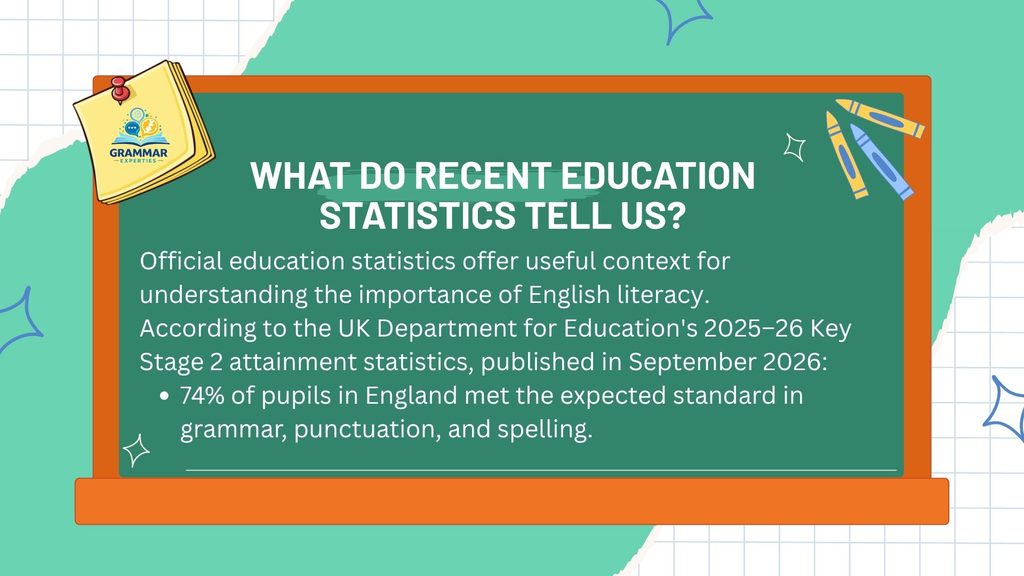
Official education statistics offer useful context for understanding the importance of English literacy.
According to the UK Department for Education’s 2025–26 Key Stage 2 attainment statistics, published in September 2026:
- 74% of pupils in England met the expected standard in grammar, punctuation, and spelling.
- This increased from 73% in 2025.
- 75% of pupils met the expected standard in reading in 2026.
GOV.UK+1
These figures measure school attainment, not confusion between peach and speech. They do, however, show that spelling, grammar, and reading remain important parts of English education.
How Can You Apply This to Everyday Writing?
You don’t need advanced grammar knowledge to distinguish these two words. You simply need to connect each word to its meaning.
Try these steps:
- Identify the subject. Are you talking about food or communication?
- Check the meaning. Does the sentence require a fruit or a spoken message?
- Read the sentence aloud. Listen for the /p/ sound in peach and the /sp/ sound in speech.
- Proofread before publishing. Check the surrounding words to ensure your intended meaning is clear.
For example, if you write, “The teacher prepared a peach for the assembly,” ask yourself whether the teacher prepared a fruit or a presentation. If the intended meaning is a presentation, replace peach with speech.
How to Remember the Difference Between Peach and Speech
A simple memory trick can help you choose the correct word quickly.
Use the Fruit vs. Speaking Trick
Associate peach with eating and speech with speaking.
- Peach = fruit: Think of a juicy peach you can eat.
- Speech = speaking: Think of a person addressing an audience.
These associations connect each spelling to a familiar situation, making the difference easier to remember.
Learn Common Word Combinations
Memorizing common phrases is another effective strategy because the surrounding words provide context.
| If you see… | Choose… |
|---|---|
| Ripe, juicy, or sweet | Peach |
| Tree, orchard, or fruit juice | Peach |
| Pinkish-orange or pastel color | Peach |
| Deliver, prepare, or give | Speech |
| Public speaking or presentation | Speech |
| Therapy, development, or communication | Speech |
For example, juicy peach and deliver a speech are natural combinations. Reading and practicing such phrases can strengthen your vocabulary.
Follow This Quick Decision Guide
Ask yourself one question: What am I describing?
- Something you can eat or a fruit-inspired color? Write peach.
- Spoken words, a presentation, or the ability to communicate verbally? Write speech.
If neither meaning fits, reconsider the sentence to make sure you have chosen the intended word.
Mini Quiz:Peach or Speech
1. She delivered a wonderful ___ at the graduation ceremony.
Peach
Speech
2. I ate a juicy ___ after lunch.
Peach
Speech
3. The teacher asked us to prepare a short ___.
Peach
Speech
4. The baby wore a beautiful ___-colored dress.
Speech
Peach
5. Freedom of ___ is an important right.
Peach
Speech
6. We picked fresh ___ from the orchard.
Peaches
Speeches
7. The politician gave several ___ during the campaign.
Peaches
Speeches
8. Which word refers to a fruit?
Speech
Peach
9. Which word refers to spoken communication?
Peach
Speech
10. The child is receiving ___ therapy.
Peach
Speech
11. True or False: Peach and speech are both correctly spelled English words.
True
False
12. True or False: The word peach means a formal public talk.
True
False
13. Choose the correct sentence.
She gave a peach at school.
She gave a speech at school.
14. Choose the correct sentence.
I bought a ripe speech.
I bought a ripe peach.
15. Which phrase is correct when talking about fruit?
Peach juice
Speech juice
16. Which phrase relates to public speaking?
Peach tree
Speech practice
17. The speaker practiced her ___ in front of a mirror.
Peach
Speech
18. Which word can describe a pale pinkish-orange color?
Speech
Peach
19. What is the plural of peach?
Peachs
Peaches
20. What is the plural of speech?
Speechs
Speeches
21. The audience applauded after the principal’s ___.
Peach
Speech
22. The farmer planted a ___ tree in the garden.
Speech
Peach
23. Which word begins with the /sp/ sound?
Peach
Speech
24. Complete the phrase: public ___.
Peach
Speech
25. Complete the sentence: The fruit salad contains apple, banana, and ___.
Speech
Peach
Frequently Asked Questions
1. Is peach or speech the correct spelling?
Both peach and speech are correctly spelled English words. Use peach for the fruit or color and speech for spoken communication or a formal talk.
2. What is the main difference between peach and speech?
The main difference is their meaning. A peach is a fruit or a color, whereas a speech is spoken communication or an address delivered to an audience.
3. Are peach and speech pronounced the same way?
No. Peach is pronounced /piːtʃ/, while speech is pronounced /spiːtʃ/. Both share the long ee vowel and the final ch sound, but speech begins with an additional /s/ sound.
4. Can I use peach instead of speech?
Not when you mean a talk or spoken message. For example, write “She delivered a speech,” not “She delivered a peach,” when referring to a presentation.
5. What is the plural of peach?
The plural of peach is peaches. For example, “We bought five peaches from the market.”
6. What is the plural of speech?
The plural of speech is speeches. For example, “The students prepared their speeches for the competition.”
7. Is speech a noun or a verb?
Speech is primarily a noun. It refers to spoken communication, a formal talk, or the ability to speak. The related verb is speak, as in “I speak English.”
8. How can I avoid confusing peach and speech?
Remember the association peach = fruit and speech = speaking. Then check the meaning of your sentence before finalizing your writing. Reading your sentence aloud can also help you catch mistakes.
Conclusion: Peach or Speech?
The choice between peach or speech depends entirely on the meaning you want to express. Both are correct spellings, but they serve different purposes in English.
Use peach when discussing a fruit, a peach-colored object, or a related description. Use speech when talking about spoken communication, public speaking, a presentation, or someone’s ability to speak.
The easiest way to remember the difference is to connect peach with eating and speech with speaking. With regular practice and careful proofreading, you’ll be able to use both words confidently.
Explore more easy grammar lessons and improve your English with Grammar Expertise
References

Maimoona Mughal is an English grammar enthusiast dedicated to simplifying confusing words, grammar rules, and vocabulary through clear, accurate, and learner-friendly content that helps readers write and communicate with confidence.